
How to Extend the Life of Your Beach Hut: Maintenance That Actually Works
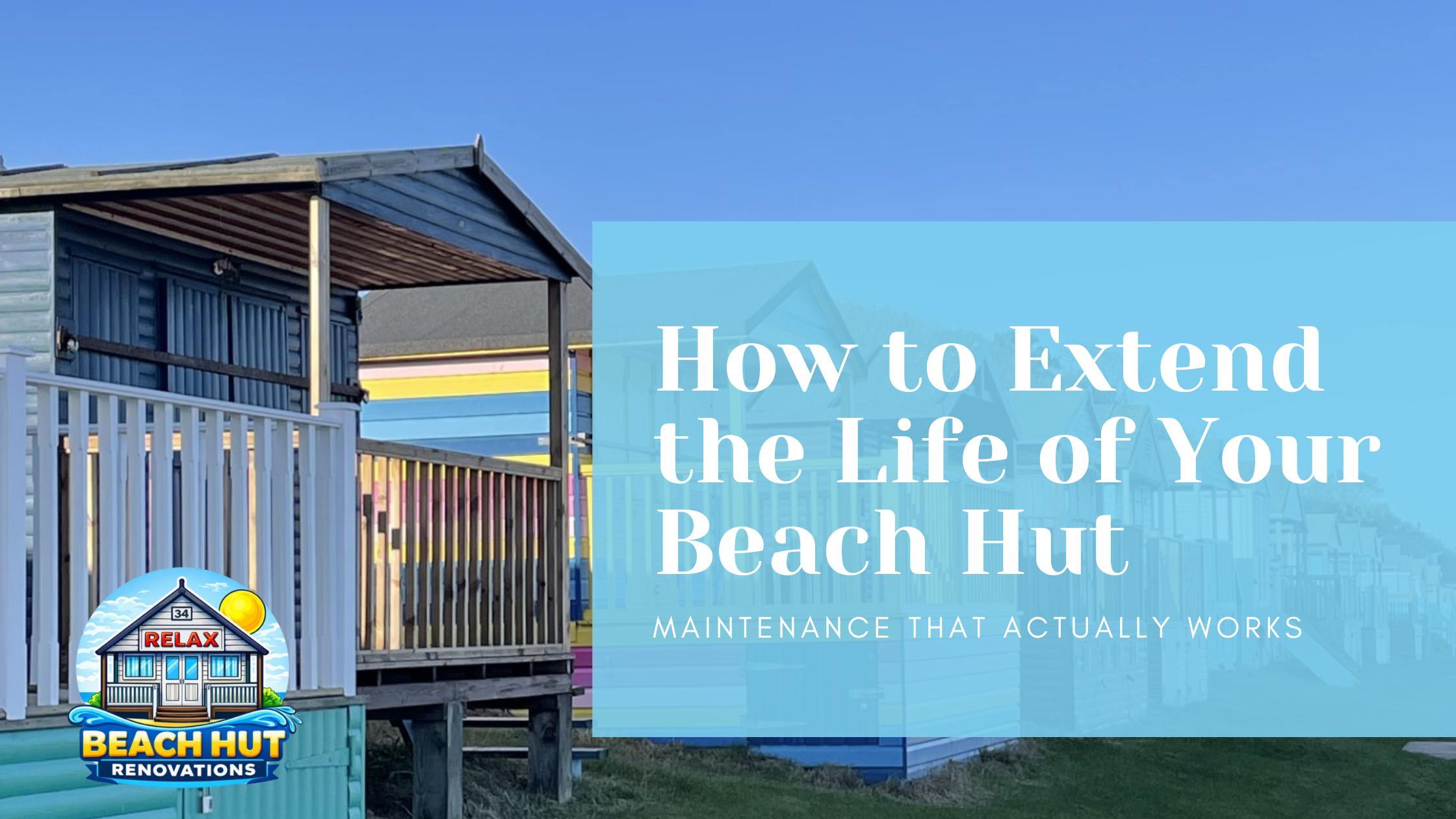
Whether your beach hut is brand new or has been standing for decades, the single most important factor in extending its lifespan is consistent, proactive maintenance. Coastal conditions accelerate wear, but with the right approach, a beach hut can remain structurally sound and visually appealing for many years.
The first step is regular inspection. Ideally, beach huts should be checked at least twice a year, once in spring and once in autumn. This allows issues caused by winter weather or summer exposure to be identified early. Peeling paint, cracked sealant, soft timber and rusting hinges may seem minor at first, but left unattended they quickly develop into costly structural problems.
Water is the primary enemy of beach huts, so maintaining effective sealing is critical. Particular attention should always be paid to roof edges, door frames, window surrounds and the junction where the hut meets its base. Even small failures in these areas allow moisture to penetrate the structure, leading to rot, mould and eventual weakening of the frame.
Equally important is using the right products for repairs and redecoration. Cheap or interior-grade paints simply cannot withstand coastal conditions. Exterior marine-grade coatings, flexible weatherproof sealants and breathable treatments designed for damp environments dramatically improve durability and reduce the frequency of repainting or repair.
Ventilation is another factor that is often overlooked. Trapped moisture inside a beach hut causes mould growth, unpleasant odours and internal decay. Ensuring that some airflow is maintained, even when the hut is locked and not in use, helps prevent internal deterioration and keeps the structure healthier overall.
The roof should never be ignored. It is the first line of defence against the elements and any failure here will accelerate damage throughout the rest of the hut. Regularly checking for lifting materials, cracks, pooling water or biological growth such as moss and algae is essential to prevent water ingress before it becomes a serious issue.
Even with good routine maintenance, beach huts benefit greatly from periodic professional renovation. Every few years, a full refresh allows vulnerable areas to be re-sealed, fatigued timber to be replaced and coatings to be upgraded before significant failure occurs. This proactive approach is far more cost-effective than waiting for major deterioration.
Extending the life of a beach hut is not about reacting to visible damage; it is about adopting a long-term strategy that protects the structure from the unique challenges of the coastal environment. With the right care and professional support, a beach hut can remain a valuable and enjoyable asset for many years to come.