
Why Beach Hut Renovation Requires a Specialist Approach
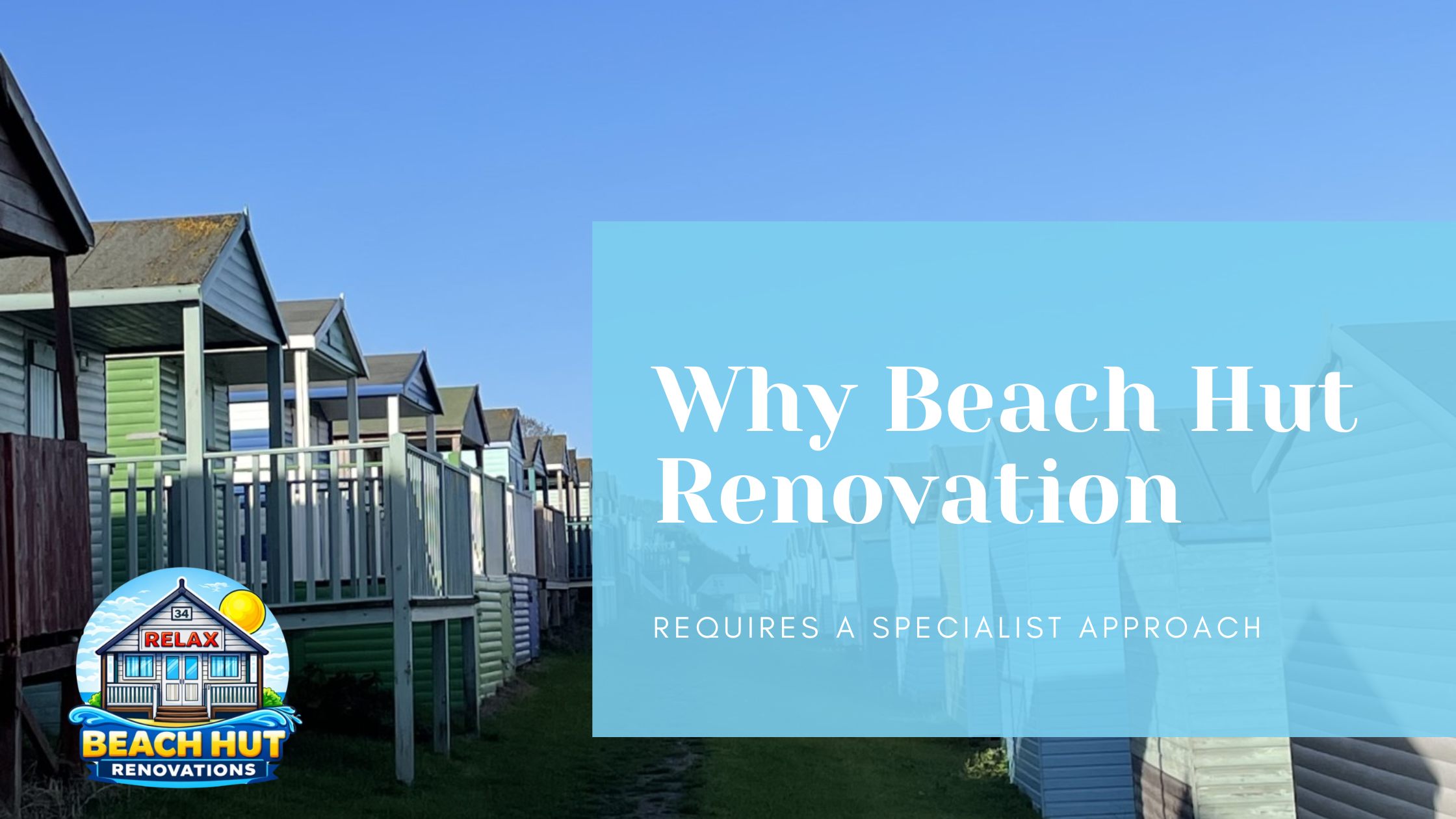
At first glance, a beach hut might appear to be a simple structure. Compact, modest in size and relatively straightforward, it is easy to assume that renovating one is no different to repainting a garden shed or carrying out light exterior decorating. In reality, beach hut renovation requires a highly specialist approach.
The coastal environment is relentless. Salt in the air, high humidity, driving rain, strong winds and direct sunlight all combine to create conditions that rapidly degrade standard building materials. Paint fails more quickly, timber absorbs moisture more readily and metal fixings corrode at a much faster rate than in inland settings. Without a tailored approach, even recently renovated beach huts can begin to deteriorate within months.
One of the most common mistakes we see is the use of domestic-grade paints and sealants. While these products may perform well on houses and garden buildings, they are not designed to withstand the salt-rich, high-moisture conditions found along the coast. The result is often blistering paint, peeling surfaces, staining from corroded fixings and ultimately water ingress into the structure itself.
A specialist beach hut renovation contractor understands that the materials used must be suitable for marine and coastal environments. This means selecting coatings that remain flexible, resist salt penetration and allow the structure to breathe without allowing water to enter. It also means using corrosion-resistant fixings and timber treatments that prevent fungal growth and rot in persistently damp conditions.
Structurally, beach huts present challenges that are rarely found in other small buildings. Base frames are often close to ground level and susceptible to rising damp and salt saturation. Roof coverings face continuous exposure with little shelter. Doors and shutters are subject to constant movement from wind pressure and seasonal changes in humidity. Renovating these elements properly requires an understanding of how coastal structures behave over time, not just how they look when freshly painted.
Timing also plays a crucial role. Renovation work needs to be planned around seasons, drying conditions and access limitations, particularly in locations affected by tides or restricted seafront working hours. A specialist contractor accounts for these variables in both planning and execution, ensuring the work lasts rather than simply looks good in the short term.
Ultimately, beach hut renovation is about preservation as much as appearance. A properly renovated hut will last longer, require less ongoing maintenance, retain higher value and provide a far better experience for its owner. Cutting corners or applying non-specialist methods may save money initially, but it almost always leads to higher costs and more extensive repairs later.
This is why beach huts should never be treated as just another small decorating job. They deserve a specialist approach rooted in coastal knowledge, appropriate materials and long-term thinking.